Bed and nighttime routines
A thin pressure pad under the mattress connects to the round sensor and tracks pressure and release in a chosen area. Bed-related interpretation depends on the mattress and sleeping position.
 LunaKareCARE AT HOME
LUNAKARE Life / Everyday sensor
The same small round sensor records movement at doors, refrigerators, sofas, tables and chairs. A thin pad under the mattress adds cues about bed presence, exits and a possible sleep window.
Find the right setup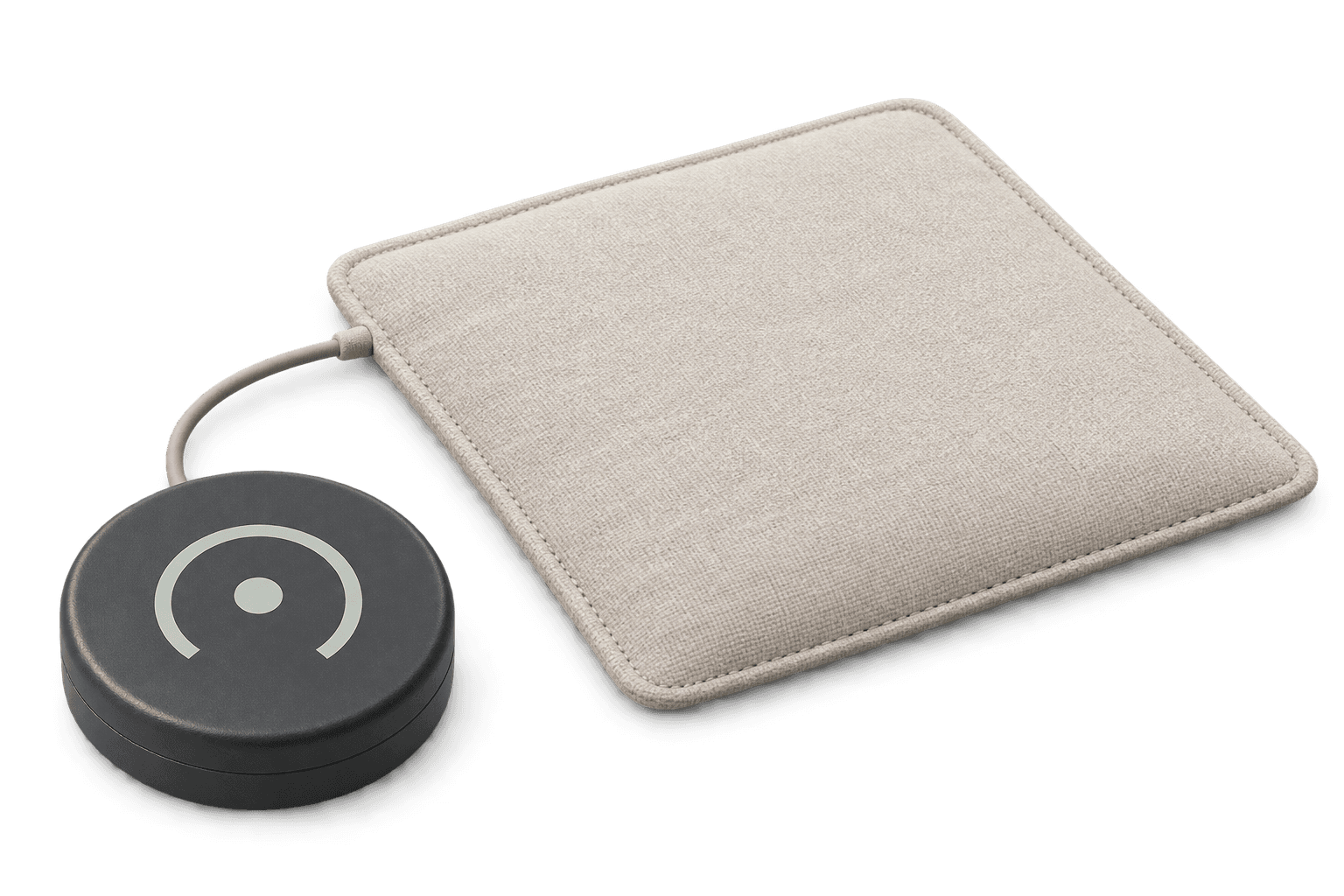
Everyday sensor
The first Life design uses one compact round circuit board with motion sensing and Bluetooth. The same core serves movement settings; a thin external pad adds bed-pressure cues when needed.
A thin pressure pad under the mattress connects to the round sensor and tracks pressure and release in a chosen area. Bed-related interpretation depends on the mattress and sleeping position.
Attach the round sensor where furniture movement reaches it. It records sofa or chair movement cues, but does not continuously determine whether someone is seated.
Place the round sensor on a moving door panel to record movement of a refrigerator or household door. These are activity cues, not a continuous open-or-closed status.
Door movement does not confirm an open or closed state. Refrigerator-door movement does not prove someone ate, and sofa movement does not prove someone remains seated. Records do not directly infer diet, health or identity.
The bed pad senses pressure only where it is placed. Moving away from that area, mattress thickness and sleeping position can affect the result. Confirm bed cues on the actual bed and show unknown when data is insufficient. Pressure duration alone does not establish sleep, sleep quality or sleep stages.
These introductions explain product roles and combinations. Confirm actual features, accessories, service regions and conditions in the formal product and service descriptions.
Start with the care that matters most to your family.